Dr Vamshi Krishna Ghanapathi
1. Eclipse – Grahana 1
2. The Timing of Rituals: When exactly? 3
3. Baudhayana Gruhya-Parishishta-Sutra: The Grahana-Shanti-Vidhi 5
4. Rigvidhana (3.15.1–4): The Eclipse Prescription 8
5. Gautama Dharma Sutra (Adhyaya 16): Timing and Impurity 8
6. Vedic Logic: The Full Picture 8
7. Kusha (Darbha) Grass: The Pranic Shield 14
8. Procedure for Placement (Smriti Muktavali) 15
9. Conclusion 16
Eclipse – Grahana
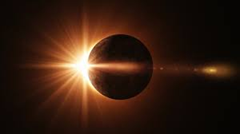
In the Indian tradition, an eclipse or Grahana (literally "seizing" or "grasping") is far more than a shadow cast by one celestial body upon another. It is viewed as a profound cosmic event where the macrocosm (the universe) and the microcosm (the human body) undergo a period of intense transformation and vulnerability.

1. The Puranic Foundation: The Legend of Svarbhanu
The metaphysical origin of the eclipse lies in the Samudra Manthan (Churning of the Ocean). When the demon Svarbhanu deceitfully drank the Amrita (nectar of immortality), the Sun (Surya) and Moon (Chandra) alerted Lord Vishnu. Vishnu severed the demon's head, but because he had tasted the nectar, both parts remained immortal. The head became Rahu and the body Ketu. Eclipses are seen as the periodic "seizing" of the luminaries by these shadow planets in an act of celestial revenge.
2. The Astronomical Siddhanta
While the Puranas offer a symbolic narrative, Indian mathematical astronomy (Jyotisha) provided precise calculations for eclipses centuries ago. The Surya Siddhanta (c. 4th–5th century CE) correctly identifies that a lunar eclipse occurs when the Moon enters the Earth’s shadow, and a solar eclipse occurs when the Moon obscures the Sun.
3. The Concept of Sutaka (Ritual Impurity)
The Dharma Shastras treat the eclipse as a period of Sutaka—a time of "birth or death" impurity for the entire universe.
Biological Logic: It is believed that the absence of natural light-rays weakens the "digestive fire" (Jatharagni). Consequently, fasting is prescribed starting 9 to 12 hours before the event.
Protection of Prana: To protect food and water from subtle atmospheric changes, blades of Kusha (Darbha) grass are placed in containers. Kusha is considered a natural radiation shield in Vedic science.
4. Spiritual Practice: The "Power Hour"
Paradoxically, while the eclipse is "unclean" for physical work, it is "supremely pure" for spiritual work.
Mantra Siddhi: The Shastras claim that any meditation or Japa (chanting) performed during an eclipse is magnified 100,000 times in merit.
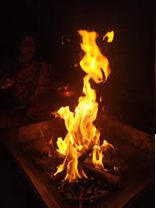
The Homa Ritual: As seen in the Baudhayana Gruhya Sutras, performing fire sacrifices (Homa) during the eclipse helps "assist" the celestial bodies in regaining their luster.
5. Moksha: The Moment of Release
The most critical phase is Moksha—the conclusion of the eclipse.
Snana (The Bath): Immediate ritual bathing in cold water (preferably a river) is mandatory to wash away the accumulated Tamasic (dark) energy.
Dana (Charity): Giving gold, grains, or clothes to the needy is the final act. Since the Sun/Moon has "suffered" a loss of light, the individual compensates by giving away their own wealth, thereby restoring the cosmic balance.
6. Summary Table of Grahana Logic
The Dharma Shastras and Puranas provide specific mandates regarding Grahana. Because the rules are scattered across various texts, the Nirnaya Sindhu (a 17th-century digest by Kamalakar Bhatta) is the gold-standard reference used by scholars today to synthesize these verses.
The Timing of Rituals: When exactly?
The "purport" (Tatparya) of the lines you reviewed—particularly "Yadā rāhur grasati" (When Rahu is swallowing) and "Athaivaṃ sarveṣu grahaṇeṣu"—indicates a synchronized ritual:
The Homa: Performed during the Grahana-Kala (the period of obscuration). This is why the texts suggest "staying awake" and "constant chanting." The fire is kept alive as the celestial light is dying.
The Dana (Charity) & Snana (Bath): Performed at the Moksha-Kala (the moment of release).
Key References from Primary Texts
1. The Requirement for Homa and Shanti
The Rigvidhana (attributed to Sage Shaunaka) is the primary manual for Vedic rituals. It specifically details the Grahana Shanti (peace ritual) to be performed if the eclipse occurs under one's birth star (Janma Nakshatra).
Reference: Rigvidhana 3.15.2–4
The Command: Prescribes performing a Homa with the Maha-Mrityunjaya Mantra or the Gayatri Mantra using Ghee and Samit (sacred wood) to ward off the physical and mental ill-effects of the shadow planets.
2. The Inexhaustible Merit of Charity (Dana)
The Matsya Purana is perhaps the most vocal about the power of the eclipse window.
Reference: Matsya Purana 206.5
The Verse: "Grahane ya dhiyate danam sarvam tat akshayam bhavet"
Translation: "Whatever is given as charity during an eclipse becomes inexhaustible (Akshaya)." It specifically recommends giving Hiranya-Garbha (gold) or Bhu-Dana (land).
3. Ritual Bathing (Snana)
The Yajnavalkya Smriti defines the necessity of the bath.
Reference: Yajnavalkya Smriti, Acharadhyaya, Verse 1.196
The Command: Lists Rahu-darshane (seeing the eclipse) as one of the specific times when a bath is mandatory for purification, regardless of the time of day or night.
Kurma Purana (Uttarardha 16.54): Adds that a bath in the sea (or a river meeting the sea) during an eclipse is equivalent to performing a thousand Ashvamedha Yagyas.
4. Suspension of Study (Anadhyaya)
The Manu Smriti focuses on the 'purity of sound' and the Vedas.
Reference: Manu Smriti 4.110
The Verse: "Nirghate bhumi-calane jyotisham ca upasarjane..."
The Command: Lists the 'clash of heavenly bodies' (eclipses) as a reason for Anadhyaya — the immediate cessation of Veda recitation. The energy of the eclipse is considered too 'chaotic' for the precise vibrations of Vedic chanting.
Summary Table of Key References
Technical Note (Nirnaya Sindhu): If the eclipse is not visible in your specific city (due to clouds or geography), the Sutaka and ritual requirements (like Homa) do not apply. The texts emphasize 'Darshana' (seeing/visibility).
Baudhayana Gruhya-Parishishta-Sutra: The Grahana-Shanti-Vidhi
In the Baudhayana Gruhya Shastra tradition, the specific rituals for eclipses are detailed in the Baudhayana Gruhya-Shesha-Sutra (Prashna 2, Adhyaya 15). This supplementary text deals with Adbhuta Shanti — rituals for extraordinary or 'terrifying' events like eclipses.
Opening Command (Upakrama)
Sanskrit: "अथैवं सर्वेषु ग्रहणेषु शान्तिं कुर्यात् ॥"
Transliteration: Athaivaṃ sarveṣu grahaṇeṣu śāntiṃ kuryāt
Translation: "Now, in this manner, for all eclipses (both Solar and Lunar), one should perform the Shanti (peace-making ritual)."
The Complete Ritual Sequence
1. Preparation (Snana & Sankalpa):
Sanskrit: "पुण्याहे स्नात्वा शुचिर्वाससी परिधाय स्थण्डिलमुपलिप्य ॥"
Having bathed and wearing two pure garments, smear/prepare the ritual ground (Sthandila).
2. Invocation (Avahana):
Sanskrit: "तत्र आदित्यं चन्द्रमसं राहुं च आवाहयेत् ॥"
Invoke Aditya (Sun), Chandramas (Moon), and Rahu into the sacred space.
3. Core Homa:
Sanskrit: "अर्कसमिद्भिर् घृतमिश्रैर् हुत्वा 'तरत्समन्दी' ति चतसृभिः ॥"
Offer oblations of Arka wood mixed with Ghee while reciting the four verses of the Taratsamandi Sukta (Rig Veda 9.58).
For Solar Eclipse: Arka wood (Calotropis gigantea)
For Lunar Eclipse: Palasa wood (Butea monosperma)
4. Offering to Rahu:
Sanskrit: "'कया नश्चित्र' इति राहुं यजेत ॥"
With the mantra 'Kayaa nashchitra' (RV 4.31.1), make an offering specifically to Rahu.
5. Transition at Moksha (Release):
Sanskrit: "मुच्यमाने स्नात्वा सुवर्णं दद्यात् ॥"
As the eclipse is being released, bathe again and give gold in charity.
6. Purification of the Self (Atma-Shuddhi):
Sanskrit: "पुनर्मामैत्विन्द्रियमिति जपित्वा ॥"
Recite the mantra "Punar mam aitu indriyam" (from the Taittiriya Brahmana) to reclaim the vital energies/senses dimmed during the eclipse.
7. Water Ritual (Abhisheka):
Sanskrit: "शान्त्युदकेन अत्मानं प्रोक्ष्य ॥"
Sprinkle oneself with Shanti-Udaka (consecrated peace-water).
8. Final Oblation:
Sanskrit: "सूर्याय च चन्द्रमसे च स्विष्टकृतं जुहोति ॥"
Perform the Svishtakrit (final 'well-made') oblation dedicated to the Sun and Moon.
9. Social Seal:
Sanskrit: "ब्राह्मणान् भोजयित्वा आशिषो वाचयीत ॥"
Feed the Brahmins and seek their formal blessings.
Phala-Shruti (Fruit of the Ritual)
"एवं यः कुरुते शान्तिं सर्वपापैः प्रमुच्यते । न तस्य ग्रहपीडा अस्ति न च व्याधिभयं तथा ॥"
"He who performs the Shanti in this manner is liberated from all sins. For him, there is no more suffering caused by the planets, nor any fear of disease."
Summary of the Baudhayana Sequence
Rigvidhana (3.15.1–4): The Eclipse Prescription
Sanskrit:
यदा राहुर्ग्रसत्यर्कं चन्द्रमा वा कदाचन । तदा स्नात्वा शुचिर्भूत्वा जपेत् सूक्तं समाहितः ॥
तथा च जुहुयाद् विद्वान् घृतेन समिधापि वा । मुच्यमाने ततः स्नात्वा दद्याद् विप्राय काञ्चनम् ॥
Translation: When Rahu seizes the Sun or Moon, having bathed and become ritually pure, one should chant the prescribed Sukta (Atri-Sukta, RV 5.40) with concentration. The wise one should then perform the Homa using Ghee or sacred firewood. When the eclipse is released, bathe again and give gold to a learned person.
The Rigvidhana points to the Rig Veda (5.40.5–9) — the hymn where Rishi Atri finds the Sun hidden by the darkness of Svarbhanu (the Vedic name for the eclipse-demon). The Homa 'refuels' the Sun or Moon; since the eclipse represents a loss of celestial light, the earthly fire (Agni) serves as a surrogate.
Gautama Dharma Sutra (Adhyaya 16): Timing and Impurity
1. Anadhyaya (Suspension of Vedic Study)
Sanskrit: "राहुदर्शने चानध्यायः स्वाभाविके ॥" (GDS 16.22)
The moment the eclipse is visible (Darshana), an immediate Anadhyaya begins. This establishes the 'ritual vacuum' during which the Homa is the only sanctioned fire-activity.
2. The Three-Night Rule
For significant celestial disturbances (like a total eclipse), the state of caution or observed impurity can extend for three nights. While the Baudhayana Homa is performed during the event, Gautama suggests the practitioner remains in a heightened state of spiritual convalescence for three days following the Homa.
Vedic Logic: The Full Picture
The Shastras acknowledge the event is uncontrolled (Svabhavika) but argue that Man is not helpless. An eclipse is a 'leak in the system.' The Homa is the spiritual mop and valve — the attempt by the individual to maintain cosmic order (Rta) when natural forces are temporarily obscured.
Based on the original Sanskrit syntax in the Baudhayana Gruhya-Shesha-Sutra and the Rigvidhana, the timing is not merely "around" the eclipse; the Homa is specifically prescribed to occur concurrently with the astronomical event.
The Logic of Shanti and Dana
Summary of the Interconnected System
To understand the full logic of the Dharma Shastra episode you’ve been exploring, we can look at how these elements work together:
In short: The logic is that you are an integral part of the universe. If the universe is "sick" for a few hours, you perform a "remedy" (Shanti) and "rehabilitate" the system through generosity (Dana).
The Shastras essentially view the eclipse as a Universal Surgery. Just as a surgeon uses sterile tools and monitors the patient's vitals, the householder uses Kusha (sterilization) and Homa (vital monitoring) to ensure the household survives the "celestial operation" without complication.
2. The Logic: Why perform a ritual for an "uncontrolled" event?
From a modern perspective, an eclipse is a predictable shadow. However, the Shastric logic for performing Homa during this "uncontrolled" event is rooted in three concepts: Pratikara, Bandhuta, and Sadhana.
A. The Theory of "Bandhuta" (Interconnection)
The Shastras operate on the principle that the Brahmanda (macrocosm/universe) and the Pindanda (microcosm/human body) are mirror images.
The Logic: If the "Eye of the World" (the Sun) is afflicted, the "Eye of the Individual" (perception/consciousness) is also affected. The Homa acts as a stabilizer. By maintaining a controlled, consecrated fire on Earth (Agni), the practitioner provides a "foundation" for the light to return.
B. "Pratikara" (Counter-measure)
The Shastras view an eclipse as a period of unbalanced energy.
The Logic: During an eclipse, the "Prana" in the atmosphere is believed to be chaotic. The Homa is essentially a "smoke screen" of purification. The smoke from Arka wood and Ghee is thought to neutralize the subtle "tamasic" (dark) vibrations that manifest when the luminaries are blocked. It is a protective shield for the individual's subtle body (Sukshma Sharira).
C. The "Magnifier" Effect (Sadhana)
Perhaps the most practical logic in the Shastra is that an eclipse creates a "Riptide in Time."
The Logic: Because the celestial order is temporarily suspended, the usual "laws of nature" are relaxed. This makes the "veil" between the human and the divine thinner.
A mantra that might take 100,000 repetitions to master on a normal day is said to be "perfected" (Siddha) with just 1,000 repetitions during an eclipse. The Homa is used to harness this extraordinary atmospheric tension for rapid spiritual progress.

D) Conclusion of the Purport
The Shastra does not believe it is "changing" the eclipse; it knows the eclipse is an inevitable movement of Rahu/Shadows. Rather, the Homa is a Response.
If the universe is undergoing a "crisis" (the loss of light), the Dharmic individual does not remain a passive spectator. Through the Homa, the practitioner participates in the Restoration of Order (Rta).
This is why the final line says "Sarva-papaih pramucyate"—it is the act of aligning oneself with the light even when the light is hidden.
The logic behind Shanti (peace rituals) and Dana (charity) during an eclipse is rooted in a sophisticated Vedic "Socio-Cosmic" theory. It isn't just about superstition; it is based on the principles of Rta (Cosmic Order) and Pratikara (Counteraction).
Here is the breakdown of the logic according to the Dharma Shastras:
E) The Logic of Shanti (The "Healing" Principle)
The Shastras view the Sun and Moon not just as rocks or gas in the sky, but as the "Eyes of the Cosmos or Key Players" and the sources of Prana (life force).
Key Observation: Read Mantra – पूर्वापर ञ्चरतो माययैतौ। शिशू क्रीडन्तौ परि यातो अध्वरम्। विश्वा न्यन्यो भुवनाभिचष्टे। ऋतू नन्यो विदध ज्जायते पुनः।। (Yajurveda Taittireeya Brahmana 02-06-12). They are the catalysts for seasons and day/ night/ fortnight phenomenon.
During an eclipse, they are 'under attack' by shadow forces (Rahu/Ketu) — a moment of celestial trauma or 'fainting' of universal vital energy.
The "Swoon" Theory: During an eclipse, the "luminaries" are under attack by the shadow forces (Rahu/Ketu). This is viewed as a moment of "celestial trauma" or a temporary "fainting" of the universe's vital energy.
The Fire as a Surrogate: Since the Sun (the celestial fire) is being obscured, the Homa (earthly fire) is lit to sustain that energy. The logic is that Agni is the brother of the Sun; by feeding the fire on Earth, you are providing "energy support" to the Sun in the sky.
Vibrational Stabilization: The chanting of Mantras (like the Taratsamandi or Gayatri) is intended to create a stable frequency. While the astronomical world is in a "shadow," the ritual space remains in "light."
Magnifier Effect: Because the celestial order is temporarily suspended, the 'veil' between human and divine thins. A mantra requiring 100,000 repetitions on a normal day may be 'perfected' with just 1,000 repetitions during an eclipse.
F) The Logic of Charity (The "Substitution" Principle)
Why give gold (Suvarna) or cows (Go-dana) exactly when the eclipse ends?
Filling the Vacuum: An eclipse represents a "loss." The Sun loses its luster; the Earth loses its light. In Vedic logic, a loss in the macrocosm creates a "debt" or a "vacuum" in the microcosm.
Gold as "Solidified Light": The Brahmana texts state: "Hiranyam vai Surya-retas" (Gold is the seed/energy of the Sun). By giving gold at the moment of Moksha (release), you are symbolically returning the "stolen light" back to the universe.
The "Power Hour" for Karma: The Matsya Purana logic is mathematical: Because the atmosphere is highly "charged" and sensitive during an eclipse, the "ripening" of an action is accelerated. A small act of kindness during an eclipse is said to yield the fruit of a massive act of kindness performed on a regular day.
G) The Biological Logic (The "Digestive" Principle)
The Dharma Shastras link the "External Sun" to the "Internal Sun" (Jatharagni or digestive fire).
The Weakening of Agni: When the Sun is eclipsed, it is inferred that the digestive capacity of all living beings drops significantly.
The Logic of Fasting: Fasting is the "Shanti" for the body. By not putting food into a system where the "fire" is weak, you prevent the formation of Ama (toxins). This is why the Gautama Dharma Sutra is so strict about Anadhyaya and dietary restriction—it is to prevent physical and mental "indigestion" caused by the cosmic shadow.
H) The Logic of "Asaucha" (Ritual Impurity)
Why do we need a "remedy" for an event that happens automatically? The logic is found in the concept of Sutaka.
The Collective Field: The Shastras argue that an eclipse isn't just a shadow on the ground; it's a shadow on the human mind. Because the "luminaries" (Sun/Moon) govern the mind and soul, their obscuration causes a momentary "flicker" in human consciousness.
The Shanti as a "Re-Boot": The logic of the Shanti ritual is to ensure that when the eclipse ends, you "restart" your system in a state of purity. If you do nothing, you carry the "shadow" (the chaotic vibration) into your next day. The Shanti acts as a vibrational reset button.
I). The Logic of "Dana" (Charity) as Energy Exchange
There is a profound economic-spiritual logic to the charity prescribed in the Baudhayana Gruhya Sutra:
The Law of Compensation: An eclipse is a "theft" of light. By giving Dana (especially gold or grains), the householder (Grihastha) is performing an act of Universal Compensation.
Neutralizing the "Graha": The word Graha (Planet) comes from the root Grah, meaning "to seize." The logic is that the planet is "seizing" energy from the Earth. By voluntarily "giving" (Dana), you shift from being a "victim" of the seizure to being a "donor" of energy. This shifts your internal state from fear to agency.

J) Dana — The Substitution Principle
Gold as Solidified Light: 'Hiranyam vai Surya-retas' (Gold is the seed/energy of the Sun). By giving gold at Moksha (release), the practitioner symbolically returns the stolen light to the universe.
Power Hour for Karma: The atmosphere is highly charged and sensitive. A small act of kindness during an eclipse yields the fruit of a massive act on a regular day (Matsya Purana).
Neutralizing the Graha: The word Graha (planet) comes from Grah, meaning 'to seize.' By voluntarily giving (Dana), the practitioner shifts from being a 'victim' of the seizure to a 'donor' of energy.
K) Biological Logic — The Digestive Principle
The Dharma Shastras link the external Sun to the internal Sun (Jatharagni, digestive fire). When the Sun is eclipsed, the digestive capacity of all living beings is believed to drop. Fasting is thus the Shanti for the body: by not eating when the 'fire' is weak, one prevents the formation of Aama (toxins).
Summary Table: Logic of Eclipse Rituals
In short: The logic is that you are an integral part of the universe. If the universe is "sick" for a few hours, you perform a "remedy" (Shanti) and "rehabilitate" the system through generosity (Dana).
Kusha (Darbha) Grass: The Pranic Shield
The Nirnaya Sindhu and various Gruhya Sutras mandate placing blades of Kusha grass in jars of water, milk, curd, and pickles before the eclipse starts. Darbha grass, also known as kusha grass, has the scientific name Desmostachya bipinnata. It is a perennial, rhizomatous grass from the Poaceae family (grass family) commonly found in Africa and Asia. It is widely used in Hindu rituals, for medicinal purposes (diuretic, treats dysentery), and in handicrafts.)
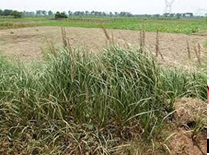
Radiation Shield: Eclipse rays are believed to become Tamasic (polluted). Kusha — biologically Desmostachya bipinnata, with high silica content and a crystalline structure — is considered a natural conductor of pure (Sattvic) energy. The logic is that during an eclipse, the "rays" (Kirana) of the Sun or Moon could become vitiated. Kusha grass is considered a natural conductor of pure energy (Sattvic).
Essential: अपाँ वा एष ओषधीना रसः, यद्दर्भाः. Essence of Water and grains is imbibed in this grass plant; therefore to preserve the essence/ vitality, maintain the contact with Darbha- This is one of the recommendations of Tatittireeya Aaranyakam, in Brahma Yajna Episode. (2.11)
Purification Logic: In Puranik thought, Kusha is born from the drops of Amrita (nectar). Another version says, it emanated from the hair of the Varaha avatara. It has higher resistance to subtle decay. By placing it in food, you create a protective grid that prevents the "shadow energy" from settling into the moisture of the food.
Mantras for Consecrating Kusha Grass
While many place the grass silently, the Grahana-Nirnaya and certain Prayoga manuals suggest awakening the grass with a specific mantra: Vedic Verse (Pavitra Mantra):
"पवित्रे स्थो वैष्णव्यौ सवितुर्वः प्रसव उत्पुनाम्यच्छिद्रेण पवित्रेण सूर्यस्य रश्मिभिः ॥"
"You (Kusha blades) are two purifiers belonging to Vishnu; I purify you by the command of Savitru (the Sun), with this flawless purifier, by the rays of the Sun."
The logic: The practitioner commands the grass to behave like a Sun-ray (Suryasya rashmi) even though the physical Sun is blocked — an act of symbolic substitution.
Procedure for Placement (Smriti Muktavali)
Selection: Use fresh Kusha grass. Pavitras (knotted grass) from previous rituals may also be used, as Kusha is considered A-mrita (never-dying).
Orientation: Place the grass pointing North or East.
Darshana Rule: The grass must be placed before the eclipse begins (Sparsha-kala). Once the shadow has touched the Sun/Moon, the atmospheric protection is less effective.
Wrap up Reminder:
Conclusion
The Shastras do not believe the Homa "changes" the eclipse — the eclipse is an inevitable movement of Rahu/shadows. Rather, the Homa is a Response. If the universe is undergoing a crisis (the loss of light), the Dharmic individual does not remain a passive spectator. Through these rituals, the practitioner participates in the Restoration of Order (Rta).
"तस्मात् सर्वं प्रयत्नतः शान्तिं कुर्यात् ॥" — "Therefore, with all effort, one must perform the Shanti."
The Shastras view the eclipse as a Universal Surgery.
Just as a surgeon uses sterile tools and monitors the patient's vitals, the householder uses Kusha (sterilization) and Homa (vital monitoring) to ensure the household survives the celestial operation without complication. When the sky goes dark, the human heart must light a fire.
Whenever Celestial events are visible, our tradition behoves you to observe, respond to connect, understand the logic and flourish In life. Don’t be oblivious to nature.